


Youth groups using creative innovation to tackle teenage pregnancy win shs148m
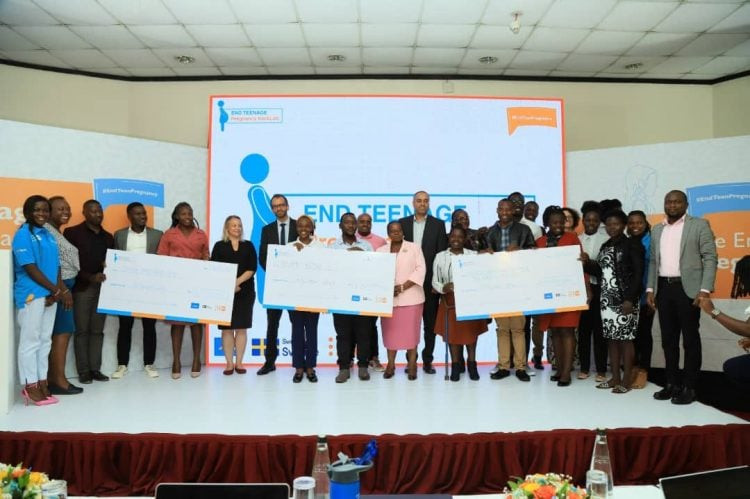
Four youth innovation groups have won Shs37 million each for developing unique innovations aimed at curbing teenage pregnancies among girls in the country.
The initiative, dubbed the End Teenage Pregnancy HackLab 2023, a UN Joint Programme on Gender-Based Violence (GBV) in Uganda was launched in July funded by Sweden, the United Nations Population Fund (UNFPA) in partnership with OutBox Uganda.
The HackLab aimed to explore innovative solutions to accelerate efforts in ending early and unintended pregnancies and ensuring the protection and fulfillment of girls’ rights.
It targeted young innovators with aspiring solutions that could make a significant impact for girls at risk of early pregnancy. The 16 districts of Abim, Amuria, Kaboong, Kaberamaido, Kiryandongo, Kotido, Napak, Nakapiripirit, Pader, Yumbe, Moroto, Gulu, Bundibugyo, Kamuli, Mayuge, and Kampala were the focus areas.
The winners of the grant included Bulamu Bridge AI, Ndaba hub, the Deaf Youth Network, and Her Worth Foundation.
Bulamu Bridge AI developed a period tracker app that helps teenagers document their menstrual cycle, learn about fertility and safe days, and consult certified health practitioners for counseling on family planning. Ndaba Innovation Hub aimed to provide reliable information to young people in areas with a high rate of teenage pregnancies, such as Amuria and Kaberamaido districts.
The high rates of teenage pregnancies in Uganda have been linked to factors such as limited access to reproductive health services, deeply entrenched cultural norms, childhood sexual abuse, high unmet needs for family planning, and child marriage.
The End Teenage Pregnancy HackLab was seen as a crucial contribution to collective efforts in tackling the issue and accelerating progress towards achieving transformative results and protecting girls’ rights.
The Uganda Demographic Health Surveys conducted in 2016, 2011, and 2006 have consistently revealed that nearly 58.2% of women aged 20 to 49 began childbearing during their teenage years. Shockingly, the rate of teenage pregnancies in Uganda has remained stagnant at 25% for over a decade.
According to the 2020 National Survey on Violence, more than half of the girls in Uganda have experienced childhood sexual abuse in the past 45 years.
Additionally, Uganda faces significant challenges in terms of unmet needs for family planning among adolescents, which stands at 30%, and child marriage, which affects 34% of girls before they turn 18. These factors contribute to the persistently high levels of teenage pregnancy in the country.
Daniel Alemu, the UNFPA Uganda Deputy Representative, emphasised the importance of developing the capacity of youth and fostering their innovation to achieve the Sustainable Development Goals.
“The youth stand as key stakeholders in advancing change in the country and the world as a whole to meet its development goals through delivering a ‘triple dividend’ of improved health and wellbeing, enhancing it throughout the life courses and contributing to the health of future generations,” he said.
He called upon all development actors to join forces in supporting the youth, as they play a crucial role in driving change both in Uganda and globally. Alemu highlighted that empowering youth would result in improved health and well-being, encompassing their entire life journey and contributing to the well-being of future generations.
Adam Kahsai Rudebeck, Head of Cooperation at the Embassy of Sweden in Uganda, expressed concern over limited access to reproductive health services and deeply ingrained cultural norms, which contribute to the persistently high rates of teenage pregnancies and gender-based violence (GBV).
Rudebeck underlined the severe consequences of these issues, including health risks, interrupted education, and the perpetuation of cycles of poverty.
Dr. Angela Nakafeero, Commissioner of Gender and Women Affairs at the Ministry of Gender, Labour, and Social Development, emphasized the need for male involvement in addressing teenage pregnancy and sexual abuse.
“Teenage pregnancy is a very big issue to the development of this country. And as a ministry we are really disturbed when we see that sexual violence, defilement and other forms of sexual related aspects are on the increase in this country, “she said.
She called for mobilising men and boys to actively reject sexual abuse in the country.
Teddy Nalwanji, co-founder of Bulamu Bridge AI who is also one of the winners, shared how their company utilizes digital technology to tackle the issue of unintended pregnancies among Ugandan teenagers.
Their app includes a period tracker that helps teenagers monitor their menstrual cycles and learn about fertility and safe days. It also features a virtual consultation platform that allows teenagers to seek advice from certified health practitioners regarding family planning and reproductive health decisions.
Hirary Odeke, representing the Ndaba Innovation Hub in Mbale, emphasised the importance of providing reliable information to address dire circumstances and ensure that young people make informed decisions.
Recent Posts


Frequntly Asked Questions
What is Bulamu Bridge Ai?
⦾ ‣ ⁌ ⁍ ⦿ Bulamu Bridge Ai is a business based in East Africa that focuses on maternal health and provides online consultation services
What services does Bulamu Bridge Ai offer?
⦾ ‣ ⁌ ⁍ ⦿ Bulamu Bridge Ai offers online consultation services for expectant mothers. Through our app, we provide access to qualified healthcare professionals who can assist with prenatal care, postpartum support, and maternal health advice.
How does the online consultation process work?
⦾ ‣ ⁌ ⁍ ⦿ To avail our online consultation services, simply download our app and create an account. You can then schedule an appointment with one of our healthcare professionals who will provide personalized advice and guidance. The consultations are conducted through secure video calls, ensuring privacy and convenience for our users.

Subscribe to our newsletter for regular updates about Offers, Coupons & more
Follow Us
Mobile Apps


